There are an estimated 450 bird species in Canada, of which more than 400 are found in the Metro Vancouver area (in 33 unique habitat areas). Nature Vancouver was previously known as Vancouver Natural History Society. The goals are to enjoy, study, and protect nature in Vancouver and throughout B.C., as well as to educate its members and the public. Activities include habitat restoration, a Christmas bird count, raptor survey, coast bird survey, and a Wildlife Tree Stewardship program.
This new and expanded edition, with more than 100 additional colour photographs, is organized by places: Vancouver, North and West Vancouver, Fraser Delta, Burnaby, Fraser Valley, Straight of Georgia (part of the Salish Sea). Other topics are the seasonal status and a select list of Vancouver Bird Species, online resources, reporting tagged or banded birds, photography etiquette, reporting harassment, nature organizations, transit and weather information, tides, black bears, cougars, and other wildlife.
The “Foreword” is by George Clulow, President of the B.C. Ornithologists, who also updated the “Introduction”. This is a new edition, since 2001, which was revised, updated, and rewritten. Nature Vancouver offers 150 field trips annually and this field guide is also useful for the tourist or vicarious traveler, because it is lushly supplied with full-colour photographs of birds and their habitats. The maps are excellent and directions clearly delineated.
Each section is discrete with an introduction and detailed directions, with descriptions for each subsection. Overall, the approach is by locality, “Which species can I expect to find in a particular area?”
The section on “Vancouver” covers Stanley Park, Pacific Spirit Regional Park, Jericho Beach Park, Queen Elizabeth Park, and Fraser River Park. The section on “North and West Vancouver” covers Maplewood Conservation Area, Lighthouse Park, Ambleside Park, Lionsdale Quay; Mount Seymour Provincial Park, and Cypress Provincial Park.
The section on “Fraser Delta” covers George C. Reifel Migratory Bird Sanctuary, Westham Island, Ladner Harbour Park, Tsawwassen Ferry Jetty, Brunswick Point; Point Roberts (Washington), Boundary Bay Regional Park, Serpentine Wildlife Area; Blackie Spit, Kwomais Point Park, Iona and Sea Islands, Lulu Island; Sturgeon Banks, Burns Bog Area, The Fraser River Delta Reserve.
“Burnaby” covers the Lake Regional Park, Deer Lake Park, the Burnaby Mountain Conservation Area, the Fraser Foreshore Park, Barnet Marine Park. The “Fraser Valley” section covers Minnekhada Regional Park, Pitt-Addington March Wildlife Management Area, Colony Farm Regional Park, Brydon Lagoon, Campbell Valley Regional Park, and Golden Ears Provincial Park.
The “Strait of Georgia” covers birding from BC Ferries to Vancouver Island, the main ferry routes, as well as others.
The “Seasonal Status of Vancouver Birds” contains areas covered, a checklist divided into two parts: a list of 268 reported annually and 152 not reported every year. Some bird species are regularly occurring and others are only seasonal, casual, or accidental. There are helpful bar graphs for sightings A “Selected List of (88) Vancouver Bird Species” answers: Where can I find a particular species?” Some are common in North America and others are not. For avid bird watchers, uncommon or rare species sightings locally (or rare and absent elsewhere) are desired. “Online Resources” send the reader to a (Yahoo Group) free online birding group with 600 members in VANBIRDS; in addition to “eBird” a free international online database, “eBird Rare Bird Alert”, and “BC Rare Bird Alert”, with a free blog, and regional reports (see: Vancouver and Fraser Valley at bcbirdalert.blogspot.ca).
Reporting wing-tagged and leg-banded birds of prey contains important contact information. Be ready with details, especially about public lawbreakers. Be respectful with a Code of Birding Ethics, and mindful of the Boundary Bay incident. There were onlookers harassing birds, using bait, loud sounds, and repeatedly flushing birds out. “They have very little space left in which to feed and rest.” (p. 253)
There are citations for nature-related organizations in the B.C. area, valuable online bird research information, hands-on research-based groups, rehabilitation and rescue groups; groups offering casual outings and nature information; public transit and weather information contacts; tides for watching water birds and shore birds. An article on black bears, cougars, and other wild animals indicates that we share the wilderness areas, so avoid such encounters whenever possible. There are additional references for further research.
All in all, The Bird’s Guide to Vancouver and the Lower Mainland is an excellent and rewarding resource, whether for immediate use in the field by a birding specialist or casually consulted by the general public; in other words, for anyone who has even a passing interest in nature.
Anne Burke
President
Friends of Nose Hill Society
Calgary Alberta
July 31, 2016
The Calgary Herald (August 31, 2016, sec A, p. 2) reported on beekeepers who will be wearing their beekeeping suits when they take on the Canmore Quad Challenge. Their purpose is to raise funds and awareness about their Bee Aware AB project. ("Couple to tackle race in beekeeping suits: Canadians seeks to raise awareness about declining bee populations.") Another report claims "Chestermere is the most bee-friendly city in the West." (Both articles were written by Volande Cole). This is a timely and topical subject in which there is definite public interest.
Another article about the perceived global glut of honey and questionable trading practices have driven the production costs up, while revenue has fallen. Statistics Canada estimates 95.3 million pounds of honey worth about $232 million were produced in 2015 (Alberta produced about half of that) 42.8 million pounds ‒ up 20 percent from 2014. ("Honey producers feel sting of low prices", Calgary Herald, Sept. 3, 2016, section C, pp. 1, 5.) An accompanying photo is of a local bee keeper near Innisfail.
Early beekeeping occurred in northern Europe, so that now we can give back to nature by caring for our gardens, pastures, and other green spaces.
Beekeeping during World War I was practiced by women to help feed their families and it came to be regarded as a "gold rush", until too many failed. Victory bee keeping alludes to World War II beekeepers who were allowed a sugar ration to feed their bees. It also invokes the sense of defence against Colony Collapse Disorder, although the practitioners of keeping bees need to be educated about competing interests of imported bees, with wild bees and other honeybees, for pollen and nectar.
This book is dedicated to future gardeners, farmers, and ecologists. The layout uses full colour captioned photographs, elaborate and decorative charts, inserts of pertinent information, pithy quotations, and observations on bee biodiversity.
The ten fulsome chapters deal with charts of weeds to leave for bees, bee plants with benefits, edible herbs for bees; vegetables for bees, new world natives, bee pasture plants; trees for bees, shrubs for bees, perennials for bees.
In "Weeds to leave for Bees" there is a seasonal planting chart, including plant origin, bloom period, hardiness, and bees attracted. "Bee plants with benefits" is a companion planting chart. "Bees of all stripes" promises the reader will "become a bee spotter". Healthy herbs for pollinators and people precedes "Edible herbs for bees" another seasonal planting chart, bee-licious edible gardens, and vegetables for bees. Those who venture afar will want to consult "Wild for Indigenous Bees" and learn more about nesting sites and materials; how to make a "stumpery" by collecting rotting wood stumps. Hollow stem "hotels" of twigs can replace Old Bee Logs or Cane Bundles which have been phased out. Beware of disease or microscopic pests. New World Natives, Bee Pasture, Trees for Bees, Shrubs for Bees offer more seasonal planting charts. Bee Hedgerows (deer resistant and bee rich) are dense borders of trees, shrubs, and vines. Eco-agriculturalists are turning to an ancient model of farming.
The penultimate chapter "Victory Borders for Bees" calls for a long-time commitment with a "Perennials for Bees" seasonal planting chart. "Growing to Love Bees" encourages a flight from indoor technology to community and family building outdoor pursuits.
This compendium is suitable for neophytes without a green thumb, as well as the mature and experienced. Anyone with an interest in joining the lifecycle of nature, of which we all form a part, in some manner or other. The text is readable, design engaging, and with more than enough suggestions.
The selection of sources contains inspiring and useful websites, helpful blogs; seed companies, online publications, useful and inspirational books.
The author is a Vancouver-based artist, from Cactus Lake, Saskatchewan. She appears in costume as The Queen Bee at schools and community events. She is a member of the Second Site Collective and Women Who Run with the Bees.
Anne Burke
President
Friends of Nose Hill Society
These compact companion guides are part of an extensive series on Nature and the Outdoors. The first-mentioned extends to Laval, Lanaudière, the Laurentians, Montérégie, and the Eastern Townships. There are fifty walking routes proximate to Montréal, ranging from city parks to wilderness treks, and the research resulted from preparation for the Hiking Trails of Ottawa. It contains a Glossary of French Hiking Terms to render the content accessible to Anglophone users. The Trans Terrebonne is part of the Trans Canada Trail network. Some unique features are the Lachine Canal National Historic Site, St. Lawrence River, Parc du Mont-Royal, Laurentian Highlands, and St. Lawrence Lowland. Indeed, the author alleges that the hiking trail network in Québec is far more extensive than anywhere else in Eastern Canada. There are more hiking trails proximate to Montreal “than in any Canadian city east of Calgary”, except, perhaps Quebec City. Surprisingly, the Québec park system is equaled only by that of British Columbia, “if at all.” (p. 10)
Given the context a hiker encounters the bad with the great: poison ivy and mosquitoes, white pine, red pine, purple aster, giant hogweed; larch, yellow birch, hemlock, sugar maple, chickadee, and the Great Blue Heron, wild turkey. Among the animals are: wolf, coyote, black bear, turkey vulture; thrush, grouse, turtle, pheasants, raccoon; woodpecker, moose, beaver, loon, deer, butterflies, and geese. There are web pages listed with resources on Outdoors Associations, Park/Trail Web Sites, Animals/Plants, General Interest, Weather, and details about cell phone coverage (or lack thereof).
The second volume includes Confederation Trail, Queens County, Kings County, and Prince Edward Island National Park. Web pages are current as of Dec. 2014, on Parks, Trails, and Outdoor Associations; General Interest, Animals/Plants, and cell phone coverage. There are fifty-six walking and biking routes, the entire Confederation Trail, at nearly 450 kms., is the only provincial portion of the Trans Canada Trail to be completed. Some unique features are: fox farming, lady’s slippers, bald eagle, aster, owl, blueberries, blue jay, red elderberry, chickadee; white spruce, sugar maple, larch, ducks, grouse, blue heron, potato blossoms, hemlock; white pine, red pine, beaver. The coyote, “the most recent wild animal to be classified as dangerous”, p. 253) is cited among woodpecker, muskrats, “singing sands one of the seven wonders of Canada”. The Green Gables is a national historic site, paired with ticks, piping plover (of which there were eight breeding pairs in 2014); raccoon, poison ivy, loon, dunes; red fox, pheasants, mosquitoes, blue heron, and others.
Both trail guides contain engaging prefaces, informative introductions, maps, full-colour and black-and-white photographs, and come complete with assessments of their “walkability” and GPS coordinates. Some common features are the “Trails at a Glance”, permitted uses, website addresses (subject to change); “Index of User Tips and Sidebar” notes as capsule descriptions on some of the plants, animals, geological features, and human institutions, such as fraternal provincial hiking organizations you might want to encounter on the various trails.
There is a degree of interaction, since you can post comments on: http://hikingmontreal.blogspot.ca.where updates since Dec. 2012 are added.
Haynes is the author of several bestselling trails guides, among them Hiking Trails of Nova Scotia, Hiking Trails of Cape Breton, Trails of Halifax Regional Municipality; Hiking Trails of Ottawa, the National Capital Region and Beyond, and numerous articles about Canada’s outdoors. He is a regular contributor to CBC radio, has worked for numerous trail organizations, including “Go for Green” and the Nova Scotia Trails Federation. He is now the Director of TransActive Solutions and conducts workshops and presentations on trail development and use, in order to improve the “walkability” and “bikeability” of Canadian communities.
Some other titles in the series are: Birding in New Brunswick, by Burroughs; Birds of a Feather, by Johns; Trails of Fredericton, by Thorpe; Trails of Greater Moncton , by Merlin; Hiking Trails of New Brunswick, by Eiselt; Waterfalls of New Brunswick, by Guitard; Woodland Canoeing, by Spakman.
Anne Burke
Natural is a term used in reference to the predominately non-human world or a reference to habitats or ecosystems that have developed unaided by humans and that are dominated by native species.
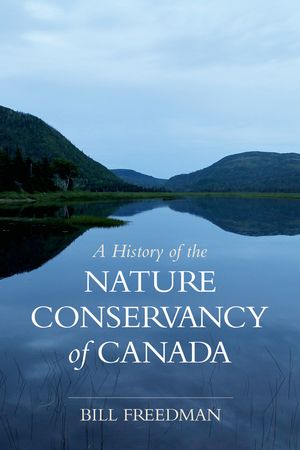
The present text charts the first five decades of the Nature Conservancy of Canada and concludes with the author’s personal view of possible outcomes over the next several decades. A strategic plan for 2012-2017 was developed to consider a Business Model, the next level of Business, Conservation Planning, Direct Conservation Action; Non-traditional Regions for NCC Action in Canada, International Work, Influence and Outreach. Since insufficient financing could hinder these objectives, private-sector conservation initiatives and a larger community of donors will be sought.
The Nature Conservancy of Canada (NCC), or The Conservancy, is a nonprofit organization intended to conserve the natural world through land trusts, stewardship plans, and by creating protected areas in carefully selected places; and to make a difference to the survival of native species and natural ecosystems; to create more and larger protected areas. This preservation and sustainable conservation of extensive private lands are used to augment public lands as parks. NCC has a non-advocacy mandate, except for tax treatment of donations, legal and funding issues; operating in collaboration with philanthropists, foundations, companies, other environmental non-governmental organizations (ENGOs), and governmental agencies. One of the aims of land trusts is to acquire such areas and fund them, if possible, through voluntary taxation by donations to environmental charities.
Conservation is sustainable use of a renewable natural resource or stewardship of the habitat of native species and other natural values in ways that allow them to be sustained.
We are experiencing a modern biodiversity crisis, a mass extinction that is happening today and is being caused by anthropogenic influences, especially the destruction of natural habitats. There are: threats to the natural world, natural extinctions, resulting in this modern biodiversity crisis, with alien species and pathogens, nature is at risk in Canada.
A protected area is a tract of natural habitat set aside from intensive economic use, such as a park, nature reserve, ecological reserve, or wilderness area. A special management area may be protected, but is usually of economic importance such that hunting, forestry, and some other extractive industries may be permitted.
In a brief Preface, the author surveys the near losses of the whooping crane, plains bison, and trumpeter swan. Is there a global biodiversity crisis, due to irresponsible economic development, given the loss of the passenger pigeon and the great auk? Others are: the Labrador duck, sea mink, deepwater cisco, eelgrass limpet; Macoun’s shining moss, blue pike, and Queen Charlottes Islands caribou. Some of the information is culled from the Committee on the Status of Endangered Wildlife in Canada (COSEWIC). Among the species now locally extinct, or extirpated, are the Atlantic whale and the blue-eyed Mary. Of those at imminent risk of extinction or extirpation (in all but an important portion of their range) or known as endangered are: the Vancouver Island marmot, whooping crane, piping plover, and thread-leaved sundew. Classified as threatened, is a species that is likely to become endangered, unless factors affecting its risk are mitigated. Classified as: of special concern means a species is at risk of becoming threatened because of small or declining numbers or occurrence in a limited range (also as vulnerable). Some of the endangered are: the tall-grass prairie, a native grassland, of which less than 1 percent survives; the mixed-grass and short-grass depleted the Carolinian forest; dry open forest, dry coastal forest, semi-desert, old-growth forest, and natural communities of fish.
Conservation refers to the judicious use of renewable resources, animals and timber, with ecologically wise use. The history of the national park movement leads to the Convention on Biological Diversity (CBD) under the United Nations program, 1993; and the Federal Species At Risk Act, 2003. Currently we have protected areas: parks, wilderness areas, ecological reserves, and comparable tracts. According to Freedman, there are 58 natural communities, with the rare tall-grass prairie, savannah woodland, southern hardwood forest, and various wetlands.
Nonprofit land trusts have a board of directors, own property, are independent, and entrepreneurial, with corporate structure, and intended conservation, as members of the Canadian Land Trust Alliance (CLTA), 2006. They work with willing landowners. A bargain sale is a land purchase for a price that is substantially less then the appraised value of the land and that usually results in a charitable tax receipt for the difference between the appraised value and the purchase price. This is what is known as a split-receipt transaction or other binding conservation agreement, associated with the appraised value, and controls the kinds of activities that can be undertaken on a property. Other factors to be considered are: a conservation covenant, conservation planning, and research.
The history of the NCC, from the beginning in 1962-71, is in Ontario and by 1962 the NCC is trustee-governed, as a no-share capital corporation (not-for-profit corporation) under the Canada Corporations Act, with charitable status under the Income Tax Act. Some of the aims are for education, to acquire land, and to solicit donations, etc. The author cites The Ontario Naturalist (1963) article.
Of note is that, as early as 1937, there existed a privately-held Province of Quebec Society for the Protection of Birds (Bird Protection Quebec). The survey moves to: The Organization, 1972-80, when Xerox Canada offered a multi-year action plan, for the conservation program, followed in 1972-80, all culled from the minutes of board meetings, endowments, and matching funds.
Working from Coast to Coast to Coast, in 1990-97, the organization, and industry players were: Shell Canada, Amoco, Tembec, and World Wildlife Fund. They continued the campaign for conservation, 1998-2005. Paul Martin abolished capital gains taxes, which were changed to environmentally friendly tax legislation for land trusts.
The campaign for Conservation, 1998-2005, adopted The One Conservancy principle which is intended to ensure that the NCC is committed to assisting financially those regions with a lesser ability to raise the necessary revenues locally to achieve the Conservancy’s mandate.
The outcome is that NCC has become a Force for Nature, 2006-2011. The Nature Conservancy of Canada “at Fifty” is examined thoroughly for governance, planning, securing of properties, stewardship, fundraising; communications with the general public, individual donors, high net-worth individuals, foundations, the Corporate Sector, governments, financial system, with a winning formula for success. In one graph we read of indicators to growth of the revenues and conserved areas of the NCC.
There are positive indications about “Further down the road” accompanying The Natural World’s biophilia, hidden biodiversity, natural heritage or native species, alien species as biological pollution; of intrinsic or inherent value, bioresources, with full-colour photographs.
In addition there are: a helpful Glossary, Appendix 1: Members of the National Board of Directors of the Nature Conservancy of Canada, and Appendix 2: Chief Executive Officers of the Nature Conservancy of Canada.
Freedman is an ecologist and professor in the Department of Biology at Dalhousie University and a long-term member of the Board of Directors of the Nature Conservancy of Canada, serving a term as it chair. He received a Career Achievement Award from the Canadian Council of University Biology Chairs (2007) and a Canadian Environment Award, Gold Medal Level, in the category of Community Awards for Conservation from the Geographic Society (2006).
Anne Burke
As this book went to press, the coauthors received a copy of Powering Generations: The TransAlta Story 1911-2011 (Calgary: TransAlta, 2011) by Robert Page and David A. French. A note says they had supplied the authors with pre-publication drafts of earlier versions of the present account which assisted them in their project. The beautifully illustrated account of the whole range of company activities provides context for the present focused examination of hydroelectric development by the company on the Bow.
An introduction parses path dependence, waterpower or hydropower, and wilderness. There are political ends of the spectrum on “wilderness”; this is augmented by founding of The Alberta Wilderness Association and the Canadian Parks and Wilderness Society.
The present authors contributed “Car Parks: The Influence of Auto Tourism on Banff National Park, 1905-1918”, in Alberta History (Winter 2008).
The authors acknowledge William Cronon’s launch of the debate in one of his essays, in a collection he edited, on Uncommon Ground: Rethinking the Human Place in Nature (N.Y.: Norton, 1995). This essay was published in Environmental History, which provoked responses to the text, such that the influence of Cronon’s essay can be tracked. The present text references Nature’s Metropolis, Chicago and the Great West (N.Y.: Norton, 1996), by William Cronon.
“It is a pleasure to acknowledge the influence of this [Cronon] book, inspired as it is in part by the ‘metropolitanism’ tradition of Canadian historiography.” (p. 230, note 13)
He loosely defines first nature as original, prehuman nature and second nature as the artificial nature that people erect atop first nature. He explores the interaction of the two natures (in the hinterland and in the city) under the dominion of urban capitalist commodity flows in separate chapters devoted to grain, lumber, and meat. (pp. 259-260, note).
They co-authored Monopoly’s Moment: The Organization and Regulation of Canadian Utilities, 1830-1930 (Philadelphia: Temple University Press, 1986); also by Armstrong and Nelles, who coauthored Southern Exposure: Canadian Promoters in Latin America and the Caribbean, 1896-1930 (Toronto: University of Toronto Press, 1988)
The duo researched The River Returns, in which they promised a forthcoming fuller treatment of the subtle and complicated matters, and are now able to offer extended coverage of the conflict between hydroelectric development and park policy.
As a result, they co-authored, with Matthew Evenden, The River Returns: An Environmental History of the Bow (Montreal and Kingston: McGill Queen’s University Press, 2009).
While Walter Hildebrandt released a brief guide, An Historical Analysis of Parks Canada and Banff National Park, 1968-1995 (Banff: Banff-Bow Valley Task Force, 1995), Armstrong and Nelles acknowledge there are polemical ends of the spectrum on parks policy. For example, a thesis that making a profit from tourism was more important then promoting preservation, is argued, in Parks for Profit, by Leslie Bella (Montreal: Harvest House, 1987). From a political science perspective, see: Paul Kopas, Taking the Air: Ideas and Change in Canada’s National Parks (Vancouver: University of British Columbia Press, 2007).
For ecological integrity, see: E.J. Hart’s J.B. Harkin: Father of Canada’s National Parks (Edmonton: University of Alberta Press, 2011). E.J. Hart also produced two volumes, The Place of the Bows and The Battle for Banff (Banff: EJH Literary Enterprises, 1999 and 2003). A Parks Canada centennial collection of essays was edited by Claire Campbell, A Century of Parks Canada 1911-2011 (Calgary: University of Calgary Press, 2011).
The present study builds on the standard account of Canada’s national parks policy in Fergus Lothian’s four-volume A History of Canada’s National Parks (Ottawa: Parks Canada, 1976).
This is number five in the Energy, Ecology, and the Environment Series. Other related titles are on Places: Linking Nature, Culture and Planning; A New Era for Wolves and People: Wolf Recovery, Human Attitudes, and Policy; The World of Wolves: New Perspectives on Ecology, Behaviour and Management; and Parks, Peace, and Partnership: Global Initiatives in Transboundary Conservation.
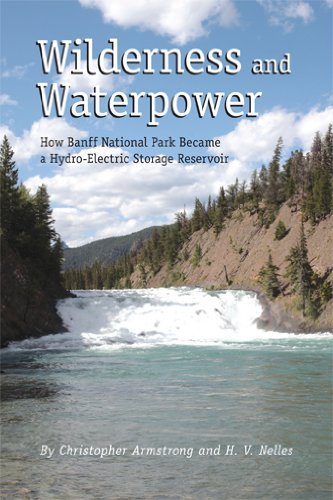
This is a stunning narrative of hydroelectric development in the Bow River Watershed, in particular about how Banff Natural Park had to be significantly altered to accommodate hydroelectric storage. They analyzed annual reports of Calgary Power, 1909-1972, and TransAlta Utilities.
Accompanying the text there are: black-and-white photos of: Horseshoe Falls Power Plant, Kananaskis Falls, (with diagrams of) Kananaskis hydro-electric plant and Dam; Lake Minnewanka Dam and Power Station, Cascade Power Plant, and Wabamun Power Plant. In addition, there are: a map of Spray Lakes Development, Calgary Power Hydroelectric Installations on the Bow River; graphs of hydroelectric development in Canada in 1910; Installed Hydroelectric Capacity in Canada, 1910-1960, Bow River Hydroelectric Development, 1910-1970; in addition to an Appendix on Calgary Power Generating Capability, 1911-90, from the company annual reports.
The accredited research sources are of the Calgary Power Company Fonds, Glenbow Archives, London House of Lords Record Office, Ottawa Library and archives Canada, Calgary Water Power Company Minute book, Edmonton Provincial Archives of Alberta, University of Alberta Archives, and Whyte Museum of the Canadian Rockies, in Banff.
Christopher Armstrong is an Emeritus Professor in the Department of History at York University. H.V. Nelles is the L.R. Wilson Professor of Canadian History at McMaster University.
Anne Burke
This is volume four in the Energy, Ecology, and the Environment Series. According to the “Foreword”, by the Chair of IUCN World Commission on Protected Areas, the number of protected areas globally exceeds 200,000; and covers over 14 percent terrestrially and over 1 percent of the world’s oceans. Further expansion by 2020 will be 17 percent and 20 percent, respectively. Among the acknowledgements, the editors compare international peace parks with international, trans-boundary, collaborative efforts. A continuous ecological and cultural system connects the landscapes, cultures, and wildlife along and across the Rocky Mountains.
Quinn offers an Introduction on the historical, jurisdictional, and geographical divisions of the Rocky Mountains, beginning with the indigenous Chief Mountain, Ninastakis, and Miistákis. Canada and the United States shared their common borders, boundaries, frontiers. There are four categories or divisions which align with the Parks for Peace in collaboration and partnership. In an overview, the locations of parks discussed in this volume are identified. There was a conference, in 2007, at the town of Waterton Park, which was impacted by security concerns since September 2001. There is a Conclusion devoted to securing a peace park between the United States and Mexico, under homeland security. One of the aspirations is that another such conference will be held. The chapters are organized into broad themes.
Section 1 “Lessons From The Field”.
Section 2 “The Southern African Experience”.
Section 3 “Education And International Peace Parks”
Section 4 “Peace Park Proposals”, including the Peace Park between India and Pakistan in northern Kashmir in the western Himalayas; a demilitarized zone between North and South Korea; The Niagara International Peace Park as a legacy twenty-first century symbol.
The Notes on thirty-four Contributors serve to display their impressive credentials in a global context. Quinn is Professor of Environmental Science and Planning at the University of Calgary. He is Director of Research and Liaison for the Miistákis Institute. Broberg is Director of the Environmental Studies Program at the University of Montana. He led the UM Trans-boundary Policy, Planning, and Management Initiative (TPPMI), an international graduate programme. Freimund is the Director of the UM Wilderness Institute and is in the College of Forestry and Conservation at the University of Montana. He is the Arkwright Professor of Protected Area Studies.
All their research is relevant, topical, well-documented, and eminently readable for both scholars and general readers who have an interest in ecological preservation efforts.
Anne Burke
There have been few incentives, in the past, for landowners to maintain wildlife habitat. The Nature Conservancy of Canada is an important component of wildlife and habitat conservation, in addition to the roles played by industry, business, government, and First Nations.
Only 25 to 30 percent of the prairie ecozone of Canada now consists of rangeland or grazing lands. It is estimated that as much as 14 percent of the 353 species at risk occur in the prairie ecozone. Public lands play a significant role in conservation. They also provide significant outdoor recreation and wildlife viewing opportunities.
Conservation of all grassland flora and fauna (since land use decisions and activities have largely neglected conservation of wildlife) must be bolstered by restoration efforts in parks management. The imperiled and depauperate status of grassland ecosystems and their species is a legacy of this neglect and the dramatic anthropogenic changes on the landscape.
(Source: The Socio-Economic Context for Swift Fox Conservation in the Prairies of Canada, by David A. Gauthier and Daniel S. Licht)
The province of Alberta has been part of the success story of reintroducing the swift fox to the wilds. However, the methods and means of capturing wild species for purposes of scientific study will be of particular interest to Nose Hill and Calgarians, given the recent controversial leg-or-paw-hold trapping of coyotes (and some domestic dogs) in public parks (including Nose Hill, Fish Creek, and Bowmont) by University of Calgary researchers.
Swift foxes were extirpated from Canada in the 1930s, but reintroduced since 1983, and their population by 1997 was approximately three hundred, which means they are still highly endangered. Of one-hundred-and-twenty-five individual animals trapped in 273 captures, fifty-three radio-collared foxes died during the study. There were no injuries (at least by sight), minor injuries, and no major injuries. Foxes were re-caught as frequently as six times in one trapping session and fourteen times over the course of the study. Table 1 demonstrates the number of swift fox captures, with no injury and with minor injury in Southern Alberta and Saskatchewan, from January 1995 to February 1998. Table 2 demonstrates comparative causes of mortality for radio-collared foxes in southern Alberta and Saskatchewan, between January 1995 and February 1998 that experienced minor injuries versus those that did not.
The causes of death for injured and uninjured were: predators, human, starvation, and unknown agents. The maximum amount of time that injured foxes were in traps was longer than that of uninjured animals. These scholars recommend a test for stress in captured animals. For the study area, human habitation was sparse. Foxes resisted removal using the noose by bracing against the trap, biting the chord, or biting the trap. One field worker restrained the fox, while the other performed parasite counts, canine measurements, and body condition assessments. Foxes were sexed, ear tattooed, treated, and radio-collared, vaccinated; then checked for no external wounds, limb irregularities, tooth breakage, chipped teeth, broken claws sheaths, external lacerations, breakage or dislocations of limbs.
(Source: Reducing Capture-Related Injuries and Radio-Collaring Effects on Swift Foxes, by Axel Moehrenschlager, et al.)
Captive breeding of the swift fox began in Canada in 1972, six years before the species was declared extirpated in Canada. The goal is to reproduce swift foxes for reintroduction into protected areas of their historic range. Swift foxes are largely monogamous and it was important that the pair bond be maintained; pairs should not be separated unnecessarily.
Swift foxes have been bred in captivity for over twenty-five years, but little has been published on the methods or results of the program. Data was collected and obtained from the breeding records, and from daily observations of the foxes. Injuries as a result of active digging along the wired perimeter fencing were common. Because of the lack of information on litter sizes in wild populations, it is difficult to make comparisons between captive-bred and wild-born litters.
Wild animals being brought into an existing colony should be examined, immunized, and quarantined for a minimum of sixty days. (Source: Captive breeding of the Swift Fox at the Cochrane Ecological Institute, Alberta, by Clio Smeton, et al.)
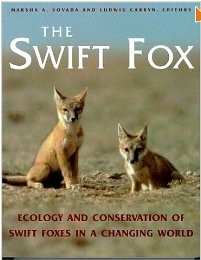
This is a peer-reviewed volume of twenty-four papers of swift fox ecology and status in North America by experts in the state-of-the-science. The topics are: conservation, distribution, habitat loss, taxonomy, and physiology. The intended readers are scientists, resource managers, and students.
The germ of the project was a 1998 International Symposium on Swift Foxes, held in Saskatoon, with papers from biologists and endangered species experts from fifteen states, three provinces, and seven countries. This is a collation of papers presented, as well as additional research since then. The five major sections are: Part I Setting the Stage; Part II Distribution and Population Shifts; Part III Censusing and Techniques; Part IV Population Ecology; and Part V Taxonomy/Physiology/Disease.
In summary, the papers consider swift fox issues in general; explore the current distribution of North American species; evaluate scent stations for surveys; along with a review on mitigating capture-related injuries. The reader will understand the dynamics of changes, related to loss of suitable habitats, due to human activities and climate change.
According to Axel Moehrenschlager, et. al., the trapping of wild mammals can lead to decreases in fitness by causing stress, physical injury, immunosuppression, or a change in scent that may subsequently affect survival. (p. 107) In North America, box and leg-hold trapping and darting from helicopters has occasionally resulted in overstress, injury, or death of coyotes, red foxes, and wolves. Radio collars have been found to affect their body weight and survival, in the first 30 days after collaring, together with neck abrasions, a paw trapped, loose collar or when a young animal outgrows it.
Anne Burke
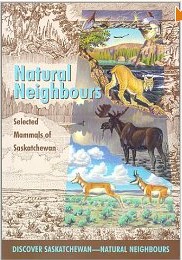
According to this competent and attractive resource, there are over 4,600 species of mammals on earth, including Homo sapiens. There are 78 species of wild mammals in the Province. The vertebrate class is Mammalia. There are suggestions for further reading. The present text contains both black-and-white and full colour photographs. There are also line drawings by a local artist-illustrator for this collective project.
This publication was a joint project with Saskatchewan Environment and Resource Management. The book contains a selection of mammals, some of which are widely distributed and others are fairly unique and/or endangered. There are species accounts of insect-eaters, rabbits and hares, gnawing mammals, flesh-eaters, and even-toed hoofed animals. It describes their appearance, habits, food, habitat, survival strategies, ecological relationships, status and range.There are four Appendices: 1 is a Listing all the Saskatchewan Mammals, 2: Mammal Specific Viewing Site Information, 3: An Ecological Perspective on processes and the Ecological Land Classification System of Canada and Saskatchewan, and 4: more detailed information on the characteristics, in an Overview of the Ecozones/Ecoregions in Saskatchewan.
This is a title in the several planned for Discover Saskatchewan sub-series on the flora and fauna of the Province. The present text is an update of the Resource Reader, first published in the late 1960s as a school textbook. Future books will describe interconnected animal and plant life. The next title will contain selected birds and further books may focus on reptiles, amphibians, trees, shrubs, native plants, fish and insects.
For further research, The Ecoregions of Saskatchewan, a technical document, reveals that the Prairie Ecozone extends into Manitoba and Alberta. You may also consult A National Ecological Framework for Canada, 1996, and Ecological Regions of North America, 1997.
Anne Burke
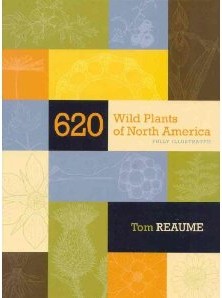
The author teaches plant taxonomy at Luther College at the University of Regina. He was not trained in botany or as an illustrator, but his interest in plants and drawing skills are advanced. He suggests that Universities make it mandatory for each student working on an advanced degree in the natural sciences to visit the herbarium and maintain dot maps for 30 species during their years of research. “That way, someone with an interest in birds, beetles, or bats might actually get to know a few plants by the time they finish their academic training.” (p. 22)
“It is, perchance,
that sweet scent of the earth
of which the ancients speak.”
—Henry David Thoreau
This is a prodigious resource with 89 Families and 620 Species, accompanied by illustrative pen-and-ink, black-and white-line drawings, in alphabetical arrangement. Each of the plant species has a letter-size page with readable print, a map of its range and large, labelled drawings in ink.
According to the author the internet was a valuable resource (cited H.D. Wilson, 2001). Some maps online are based on published books. As the Flora of North America volumes are published (two per year) their maps become available online at www.fna.org. The author admits it was impossible to recheck the original identifications or to make adjustments for some taxonomic changes.
This sumptuously produced reference work contains a Foreword, by the Academic Dean and Professor of Biology, Luther College at the University of Regina, who espouses “the beauty of the drawings, the beauty of the plants shown, the beauty of the poetry and ecological insights, and the beauty of this part of the world”. (p. 8)
In the Preface, Reaume opines, “From a naturalist’s perceptive, all plants are native to this planet and were drawn with little thought to their place among undulating human attitudes.” (p. 9). Among his acknowledgements are: Nature Manitoba (formerly Manitoba Naturalists Society), University of Winnipeg, and University of Manitoba, the Living Prairie Museum in Winnipeg, and others.
In his Introduction, he observes, “At the fundamental level nature, for whatever reasons, prefers beauty.” (cited David Gross, p. 13) This section outlines Field play; Arrangement of Species; Names, Illustrations, Species Descriptive Text; Measurements, Native Plant Restoration, and Maps of Plant Ranges.
In addition, there are: a glossary, references, and maps, the area covered for the range of each species, general location of mountains and four vegetative types presented with five patterns or ecozones of Boreal Forest, Tundra, Mountains, Prairie or Great Plains, and Deciduous Forest.
This is an essential tool for scientists and would-be scientists to learn about the taxonomy of plants, amid the wealth of the natural world, depicted and respected for its endless variety.


McCloskey has edited and written several nature guides for Lone Pine Publishing, including her recent Bear Attacks books. She has a Bachelor in Science, with a major in conservation biology and management from the University of Alberta. She surveys current wolf management across Canada: culling, hunting and trapping; aerial shooting, poisoning, and sterilization. There are some other strategies which involve non-lethal measures, as well as mitigation of human impact on wildlife. She observes that the wolf is now primarily a Canadian species, although there has been some reintroduction to the United States. In general, wolves will avoid urban areas, while coyotes can become habituated to garbage. The animal story is a Canadian genre. The word bounty has been replaced by incentive and compensation. This book contains maps, black-and-white photographs, and References.
Tamara Eder has a degree in environmental conservation sciences. Gregory Kennedy is a naturalist and historian, producer of film and television programs. Their book, with a Quick Reference Guide, contains full-colour photographs and illustrations; maps, a glossary, selected references, and an index. We find: hoofed animals; whales, dolphins, & porpoises; carnivores, rodents, hares & pikas; the mole family of insectivores & opossums; with keys to bats and shrews. Among the carnivores, in the dog family, are: coyotes, grey wolf, arctic fox; swift fox, red fox, and grey fox. Although rabbits and hares belong to the same family, you will learn their distinct differences.
Only nine humans have been killed by wolves in North America in the past 110 years. As the number of moose, elk, deer, and other prey species grow, so do the number of wolves. (Source: Controlling the wolf population won't save caribou, biologists say, by Ed Struzik, Edmonton Journal, Monday, June 13, 2011, B3.)
Anne Burke
With an informative introduction on The Key Role Played by Wolves in Community Ecology and Wildlife Management Planning, this collection of nine essays has been divided into two Sections. Section I Re-discovering the Role of Wolves in Natural and Semi-natural Ecosystems deals, in part, with the population genetics of wolf-like canids, establishing What, if anything, is a wolf? The articles examine the recovering of wolves in Banff and Yellowstone National Parks, as well as comparing the future of wolves and moose.
The Section II Wolves Role in Wildlife Management Planning includes a study of Human Impacts in Protected Wolf Populations, Hunting and Removal of Wolves. The articles analyze anthropogenically-modified snow conditions on wolf predatory behaviour; re-colonizing the wolf population in two Scandinavian countries; as well as wolf management in Eastern Europe, in comparison with North America. In addition, a snowmobile wolf hunt in the North West Territories is described, with reducing wolf depredation risk in Alberta.
In Alberta, wolves are relatively abundant in northern and central Alberta; wolves in southern Alberta are restricted to the foothills of the Rocky Mountains along the southwest forest and agricultural fringe. The authors observe that non-lethal means, such as relocation, to protect livestock may be essential to maintain a viable wolf population in southern Alberta. (p. 262)
Grizzly bears are hit and killed by trains in Banff National Park. Biologists and ecologists study bear-and-wolf behaviours, with radio-or-satellite-collars. To capture wolves, nets are cast from a helicopter and the wolves anaesthetized. Wolves use roads for easier transportation because they are free of obstacles and thick vegetation. In Canada, wolf hunting and trapping are both allowed. Ranchers can kill wolves that are considered a threat to their livestock year-round. Governments may kill wolves to protect prey populations.
Complementing the text are 38 colour photographs, grouped at the back of the book, 44 black-and-white figures, and 9 pencil drawings. There is a profusion of tables and figures, with a bibliography of Literature Cited (pp. 287-352).
This is number 3 in the Energy, Ecology, And The Environment Series, preceded by Place: Linking Nature, Culture, and Planning, by J. Gordon Nelson and Patrick L. Lawrence, Number 1, and A New Era for Wolves and People: Wolf Recovery, Human Attitudes, and Policy, edited by Marco Musiani, Luigi Boitani, and Paul Paquet, Number 2.
Both Musiani and Paquet teach at the University of Calgary. Paquet was the founder and director of the Central Rockies Wolf Project in Canmore, Alberta.
The List of Tables and Figures, with Biographies for the Editors, Contact Authors and Artists, should have been placed near the end of the book.
Anne Burke
This joy-filled narrative is a recent contribution to the grand tradition of the animal story, practiced by Edward William Thomson (1849-1924), author of Old Man Savarin Stories; and Americans Ernest Thompson Seton and Teddy Roosevelt.
Some of these were fictionalized accounts of animal-human interactions, based in first-hand experience. More recently, a journalist's 2005 bestseller about a family dog, (after a move from Michigan to Florida) as the memoir by John Grogan, Marley and Me: Life and Love with the World's Worst Dog became a movie. The title was abbreviated from the adage Birds of a Feather, Flock Together written by and for a naturalist; of interest to birders, child and child-like readers.
This title, which incorporates some of her fan mail from readers, contains black-and-white illustrations by the author, who is also an artist, sculptor, and poet. The chronology cycles through spring and summer, ending with winter solstice. Johns lives and paints in rural Nova Scotia. She manifests maternal pride in her adopted babies, youngsters, and adolescents, who seem like new kids in a schoolyard (p. 228)
Gannets are among her avian convalescents, while starlings and deer make their appearances in this back-garden-centric setting. Her attempts at gardening are sometimes foiled by raccoons, snakes, mice, and squirrels, much as prey animals are sanctioned by predators. A queue of cow, sandpipers, cats, and starlings accompany her efforts and, with varying results, to release some of them into the wild.
More often, rehabilitated grosbeak, raven, ladyhawk, falcons, and woodpeckers must be fed, on occasion by bug and worm hunting, in order to provide for their growing menage of animals. Naming plays a significant role in habituated pets, such as the goats, Mower and Munch, her robins and turkeys, her husband Mack, Kiwi male and Starr a female, Beejay and Pip bluejays, to promote her anthropomorphic point of view.
Rehabilitation of injured wildlife may prepare them only to become part of a domestic household as family members. Johns named her rabbit Edna, after Edna Staebler, a dear friend and long-time writer of cookbooks. Blossom, a chicken, leads a variety of pigeons, warbler, ducks, Whiskey a grey jay, and assorted woodcocks.
I concur with a reader, that:
"I now see animals and other living creatures with an entire[ly] new perspective. I always knew they can show emotion as well as deep feeling, but it is the birds that surprised me most of all." (p. 61)
Johns is the author of Sharing a Robin's Life (1994) which won the Edna Staebler Award for Creative Non-Fiction, the only such award in Canada, endowed by Staebler (1906-2006) and administered by Wilfred Laurier University). Other popular titles are: In the Company of Birds; For the Birds; A Feathered Family; and Wild and Woolly.
Anne Burke
This text, with full colour photographs and a map, is suitable for neophytes as well as experienced gardeners who face the challenging growing conditions of gardens in the Canadian prairies and the northern Great Plains of the United States. Some of the options are: designing by habitat as well as by function. The step-by-step process involves purchasing, planting, and maintaining gardens. There are details about getting ready; purchase and planting; propagating, and maintaining. Proper preparation includes spacing. Propagation involves seed; suckers, divisions, and layers; hardwood and softwood cuttings. Maintenance calls for mulching, pruning, fertilizing, and pest and disease control.
This is an able follow-up to Best Trees and Shrubs for the Prairies by the same authors. Skinner has a B.S.A. in Horticulture from the University of Manitoba and Williams, who is a retired Horticultural Specialist at the University of Saskatchewan, has a B.Sc. and M.Sc. in Horticulture from the University of Saskatchewan. She is the author of Creating the Prairie Xeriscape and of In a Cold Land: Saskatchewan's Horticultural Pioneers and co-author of Perennials for the Plains and Prairies.
There is a Glossary of Terms, a Bibliography for further reading, and an Index.
Anne Burke